Blog

Blog

Loan against Mutual Funds

Loan against Mutual Funds, Can it be a Smart Move?

Loan Against Mutual Funds: A Smart Financial Move 1111111111 Rating 8.50   Friday, December 06 2024Source/Contribution by : NJ Publications When it comes to life’s significant moments like child education, marriage, travel, retirement, etc., we probably have a plan in place. We even try to plan out our unplanned expenses by creating an emergency corpus fund. But the fact is no matter how much planning we do, there will always be some unexpected expenses knocking at our door like house repairs, purchase of household equipments or illness . Under such cash-strapped times, your first instinct might be to dip into your savings and sell off investments, even if it means taking a loss. Unfortunately, most of us prefer redeeming mutual fund units, considering that we can encash it in a few days or few hours. Though this option might seem convenient in the short term, it may have a huge impact on the investors wealth creation journey in the long-run and we lose out on compounding returns. So, is there any better option available? The answer is “yes”. Instead of liquidating your mutual fund investments, you can avail a loan against them this is a new opportunity offered by N J. Similar to using gold or real estate as collateral, you can borrow money from banks or financial institutions using your mutual fund holdings and such facilities are called Loan Against Securities (LAS) or Loan against Mutual funds. With LAS or Loan against mutual funds, one can continue his/her investment regardless of the circumstances he/she faces and continue to achieve his/her returns on the investmenr. Let us understand this with an example! If one started an SIP of Rs. 10,000 monthly on 1st April 2000, his value after 25 years, i.e. as on 31st March 2025 would be Rs. 2,74,34,400 against the total investment of Rs. 30,00,000. However, during his investing journey if he had withdrawn Rs. 14,00,000 in total at different intervals for his unplanned expenses, the post withdrawal value would be only Rs. 1,81,33,910 i.e. his overall wealth would have been reduced by almost 34%. On the other hand, instead of withdrawing money for his unplanned expenses, if he had opted for LAS or Loan against Mutual funds of the same amount @15%, he would have paid an interest of Rs. 5,98,350 in total. Even after paying this interest, he would be in a win-win situation because his SIP will continue to grow and his corpus would be more i.e. Rs. 2,68,36,050 (Rs. 2,74,34,400 – Rs. 5,98,350) even after adjusting the interest component. SIP of Rs. 10000 in Sensex TRI, SIP Start Date: 10 April 1999, Corpus as on 31st March 2024 Years Amount Unplanned Expenses Post withdrawal Loan Interest 5 ₹9,40,893 ₹2,00,000 ₹7,40,893 ₹85,479 10 ₹19,78,567 ₹3,00,000 ₹13,72,277 ₹1,28,218 15 ₹65,00,563 ₹4,00,000 ₹43,45,778 ₹1,70,958 20 ₹1,24,31,264 ₹5,00,000 ₹80,70,175 ₹2,13,697 25 ₹2,74,34,408 ₹14,00,000 ₹1,81,33,917 ₹5,98,353 Hence, one can earn more if he/she does not withdrawing rather choosing a loan against mutual funds. However, before opting for such loans one should consider a few important points which we will cover in this article also take the advice of a good financial advisor like INVESTINSURE all services are online and immediate results. How much loan can be taken? Many banks set both a maximum and minimum limit on the amount of loan you can obtain. The limit of the loan depends upon the value and the volatility of the security that is pledged against the loan and this amount may differ from one bank to other as per their policy. For example, for equity or hybrid funds you can avail a loan of 40% to 50% of net asset value and in case of debt funds, the limit may exceed upto 70% to 80% of net asset value. However, not every mutual fund scheme can be pledged, one should check upon the list of eligible schemes with their respective banks or financial institutions in order to avail the loan. talk to a good advisor and try to repay the loan in the shortest time if possible. At what interest rate? Generally, the interest rate depends on the tenure of the loan and the institution from which it is taken. The interest rate on LAS or Loan against Mutual funds  is usually in the range of 11% to 16% per annum. Any additional charges? Most financial instituations will charge you a processing fee is in the range of 0 to 1% of the loan amount or a fixed amount. Also, there can be additional document charges for the fresh loan and a top-up loan. What will happen to the existing lump sum or SIP investments in mutual funds? A loan against mutual funds does not impact your ownership rights over the mutual fund units, allowing you to capitalize on potential market appreciation and compounding growth. The bank will only sell them if you fail to repay the loan as agreed. if you have no intension or source to repay it is adviced to sell the Mutual funds and not take loan for right decision please consult your financial advisor or INVESTINSURE on https://ins.rajivmehta.in   Is it still really better than any other option? Loan against mutual funds v/s redemption An investor gets a choice between taking a loan against mutual funds or redeeming the mutual funds units. Early redemption of mutual funds units can lead to exit load of 0 to2%. But in the case of loan against mutual funds, no such load would be charged to investors. Similarly, there are tax implications 15% for short term  when equity or debt schemes are redeemed, while in case of LAS or Loan against Mutual funds, no such question would arise for long-term or short-term capital gains. Moreover, your investment will continue to grow and you can benefit from the power of compounding in the long-term. Loan against mutual funds v/s personal loans Loan against mutual funds are backed by collateral which makes it less risky for lenders, hence, they charge less interest rates as compared to personal loans. The

Loan against Mutual Funds, Can it be a Smart Move? Read More »

Retirement Planning & Mutual Funds

Doing Mutual Fund Planning by Yourself is a Risky Endeavor?

ins.rajivmehta.in/wp-admin Doing Retirement Planning & Mutual Fund Investment by Yourself is A Risky Endeavor? 1111111111 Rating 0.00 Friday, January 3 2025Source/Contribution by : NJ Publications Doing Retirement Planning & Mutual Fund Investment by yourself has gained significant popularity in recent years, with more and more individuals taking control of their financial future. While it can be empowering and motivating to manage your own investments and see it grow, it’s essential to weigh the risks and rewards carefully. The Appeal of DIY Investing Control: You have complete control over your investment decisions. Potential for Higher Returns: With active management, Retirement Plannering and Mutual fund  investorment by yourself can potentially achieve higher returns by taking advantage of market inefficiencies or undervalued assets. Lower Costs: Mutual Fund Investment personally eliminates management fees and commissions typically charged by financial advisors. Learning Opportunity: Doing your own Retirement Planning can be a great way to learn about financial markets, investment strategies, and personal finance, helping individuals become more financially literate. The Risks of Doing it yourself Investing Before embarking on your Retirement Planning and Mutual fund Investment journey, consider the following factors: Time Commitment: Successful investing requires significant time and effort to research, analyze, and monitor investments. Do you have the time and energy to dedicate to research and analysis? Emotional Decision-Making: Emotional biases can cloud judgment, leading to impulsive decisions. Can you remain calm and rational during market fluctuations? Many people due to fear back out when the bear market starts and prices collapse. Financial Knowledge: A solid understanding of financial concepts, market trends, and investment strategies is crucial. Do you possess the necessary financial knowledge and skills to make informed decisions? Most of my clients first invested from opionions of Google and lost money like the Defence funds the market was full of messages that it is giving 125% returns and today it is down. Diversification Risks: Without a well-thought-out strategy, Retitement Planning and Mutual Fund Investments  might inadvertently concentrate their portfolios, increasing risk. Can you diversify your portfolio without expert advice? Regulatory Knowledge: Navigating investment regulations and tax implications can be complex, and Retirement planners and investors may overlook important compliance issues and may pay high taxes and lose on the good returns they have got. Opportunity Cost: Time spent on Retirement Planning might be better spent on other endeavors, such as career advancement or personal interests. If you’re unsure about your ability to manage your investments effectively, consider seeking professional advice from a financial advisor like INVESTINSURE in Mumbai. you will receive good and right advice as per your needs. Role of Financial Advisor A Financial advisor like INVESTINSURE plays a pivotal role in the investment journey of an individual. They act as a bridge between the investor and the investment products, guiding and assisting investors in making informed decisions. Here are the key roles and responsibilities of an advisor: Need Identification of investor Every investor has unique financial needs. Advisors assess an investor’s current financial situation such as income, expenses, assets, and liabilities to gain insight into their overall financial health. They assist investors in clarifying their financial objectives, whether related to retirement, education, buying a home, or other significant life events. Once these needs are identified, advisors help prioritize them and estimate the necessary investment amounts. Ascertain right Asset Allocation Advisors tailor investment strategies to each investor’s unique needs. By assessing an investor’s risk tolerance, financial needs, and time horizon, advisors can construct a diversified portfolio that balances risk and reward. This involves carefully allocating assets across various asset classes, such as mutual funds, stocks, bonds, etc. to optimize returns while minimizing risk. Hand hold investors in volatility, so that they don’t diverge from their Asset Allocation The financial market can feel like a roller coaster, with unpredictable ups and downs. In times of economic turbulence, emotions like fear and greed can cloud investors’ judgment. Navigating market fluctuations can be challenging without guidance. Financial advisors help investors transform market chaos into opportunities for long-term growth. During volatile periods, a rational advisor serves as an anchor, ensuring that clients stay focused on their financial objectives. Maintaining Detailed Records and Adhering to Regulations Advisors meticulously maintain detailed records of all client interactions, transactions, and investment decisions. This ensures transparency, accountability, and compliance with industry regulations. By adhering to strict regulatory guidelines, advisors protect the interests of their clients and maintain the highest standards of professional conduct. Beyond Short-Term Performance While past performance can be a useful indicator, it’s crucial to remember that past performance is not indicative of future results. Focusing solely on short-term fluctuations can distract investors from their long-term objectives. A more sustainable approach is to adopt a long-term perspective and prioritize a well-diversified portfolio that aligns with your risk tolerance and financial objectives. Portfolio Review and Rebalancing Market conditions are constantly evolving, and it’s essential to regularly review atleast every 6 months and rebalance your investment portfolio every year. Advisors play a crucial role in monitoring market trends, assessing portfolio performance, and making necessary adjustments to ensure that your investments remain aligned with your financial needs. Investors stay informed from regular reports and insights from advisors amidst market shifts. Final Words Ultimately, the decision to pursue Do It Yourself investing is a personal one. It’s important to weigh the potential benefits and risks carefully and choose the approach that best aligns with your financial needs and risk tolerance. RAJIV MEHTA

Doing Mutual Fund Planning by Yourself is a Risky Endeavor? Read More »

Financial Freedom and Retirement Planning

Achieving Financial Freedom & Retirement Planning

Achieving Financial Freedom & Retirement Planning   Lessons from Wealthy Individuals Own Your Home The cornerstone of financial freedom is owning your first home outright. If you need to borrow to buy a home, Borrow that money and plan to pay it off. When purchasing your first home with a mortgage say, a 30-year term, mark that date in your calendar. Each time you buy or change your home or refinance or buy a new second house, avoid the temptation to extend your payment schedule beyond that date. Pay more EMI principal payments each month to ensure that your home is fully paid off within 30 years of buying your first home this is the important point in Retirement Planning. If you’re less than 30 years away from retirement, prioritize paying extra toward your mortgage to own your home before retiring. This strategy not only secures your living situation but also provides immense peace of mind. Avoid Paying for Points or Mortgage Fees Mortgage fees and points are often unnecessary expenses. Since you may refinance or replace your home, these fees become sunk costs that you’ll never recover.  In India our bankers tell us to buy Insurance to cover your Mortgage amount this is a waste of money if we sell the property before the term period. Stick to a 20% Down Payment Always put minimum 20% down on real estate. This ensures you have equity in your home from the start, which can protect you in the event of a real estate market crashes. Additionally, never let your mortgage payment exceed 25% of your take-home salary. Banks and realtors may tell you that you can afford more house, but resist this advice. Staying within these limits keeps your financial situation stable. Save at Least 25% of Your Income for Retirement Planning As a baseline, invest at least 25% of your earned income/salary toward retirement planning annually. This is non-negotiable. Ideally, you should aim to max out contributions to your 401(k). Keep in mind that the 401(k) contribution limit isn’t just $19,000 (or the current cap for regular employee contributions). The total limit, including employer contributions, can go up to $56,000 or more, depending on the year. If you’re not maxing out, consider opening a brokerage account with the same company hosting your 401(k). Invest in low-fee index funds and contribute automatically with each pay check. In India you can invest in Mutual funds, Stock Market, or Insurance to take advantage of the 8th Wonder of COMPOUNDING Never Finance a Vehicle Always save money to buy a car outright. Financing depreciating assets like vehicles is a sure fire way to erode your wealth. If you’re buying used cars, aim for those still under the manufacturer’s warranty. This minimizes repair costs and maximizes reliability. Save Raises and Bonuses Each time you get a raise, save the additional take-home money rather than spending it. If your 401(k) isn’t maxed out, direct the raise toward retirement contributions. If it’s already maxed, invest the additional income into low-cost index funds through a brokerage account. Automate the process so you never even see the extra money in your checking account. For Indians start an additional SIP equal to 25% of your raised salary. Similarly, put every bonus or windfall into your Lump sum investments in Mutual funds. This disciplined approach accelerates wealth accumulation. Limit Dining Out and Other Luxuries One simple way to save money is to limit dining out to once a week or less. Instead, prepare meals at home and allocate the savings to your investments. While small in the short term, these consistent efforts compound over time. Embrace Frugality… Until It’s Time to Enjoy Once your net worth reaches a level you could never have imagined or you feel it is sufficient and you are financially free, it’s okay to ease up on frugality. Wealth is a means to an end, not the end itself. Living like a miser until age 70, only to splurge during the final years of life, is counterproductive. Instead, as your financial situation becomes secure, gradually allow yourself to enjoy the fruits of your labour. For instance, start by enjoying half of each future raise. Dine out more often, fly business class for vacations, or save up for a new car instead of buying used. Upgrade your lifestyle in ways that genuinely enhance your quality of life, knowing you can afford it. Make Strategic Investments Consider investing in your dream home or a weekend cottage if you’re sure you’ll use it. Do not buy homes to give on rent and earn on rent. Real estate can be both a personal luxury and a financial investment. However, always evaluate the long-term benefits and costs before making such decisions. Moving towards Financial Freedom One of the greatest advantages of saving and investing is the peace you get as you move towards financial freedom, Imagine being laid off from your job. Instead of panicking, you can take your time finding a new role because your savings allow you to maintain your lifestyle. Even during challenging periods, your net worth continues to grow due to rising real estate and stock market values. This freedom to scale back and regroup is the ultimate demonstration of Financial Freedom. Maintain Perspective on Wealth Money is a tool, not a goal. It’s important to find a balance between saving for the future and enjoying life today. A disciplined approach to finances gives you the freedom to live life on your terms—whether that’s pursuing a dream job, taking extended vacations, or spending more time with loved ones. You will find it difficult to believe but if you invest today Rs 10000 and collect it at the end of 30 years on your retirement, you will have in your hand Rs1433706 or 14 Lakhs plus worked out at 18% returns per yr.  To know more such tricks contact INVESTINSURE now so that you have FINANCIAL FREEDOM before retirement to enjoy your second inning to its fullest. 

Achieving Financial Freedom & Retirement Planning Read More »

Retirement Planning

RETIREMENT PLANNING: SECURE YOUR FUTURE TODAY

 RETIREMENT PLANNING SECURE YOUR FUTURE TODAY INVESTINSURE help you in Retirement planning which is a critical yet often overlooked aspect of personal finance. As we navigate through our careers we forget we have to retire and the thought of retirement planning can sometimes feel distant. However, retirement planning should start at the age of 30 to 40  and separate saving account only for retirement is essential to ensure financial security and peace of mind in your golden years. Why is Retirement Planning Important? Retirement marks the end of active source of income and the beginning of depending on savings in Mutual funds, investments in insurance, and pension plans like PPF and ESIC to sustain your lifestyle. Without proper planning with a financial advisor, you may face challenges in meeting daily expenses, unexpected medical costs, or achieving dreams like traveling international, pursuing hobbies, or supporting your family and your pampering your grandchildren. Proper retirement planning helps: Maintain your current lifestyle after retirement. Proper Planning against inflation. Taking Care of financial cushion for emergencies. Reduce dependency on children or other family members. Steps to Effective Retirement Planning Define Your Retirement Goals Start by envisioning your retirement. What kind of lifestyle do you want will you maintain the same life style? Do you plan to travel extensively nation and international, are you planning downsize your home now that you are alone, or pursue a passion project? Write all this objectives properly and putting todays expense against each make a total then add 6% inflation for each yr. This is your monthly or annually minimum expenses required in your retirement. Determine Your Retirement Corpus Estimate how much money you’ll need after retirement. Consider: Your life expectancy at least 85 years. Expected monthly expenses as worked out in last page. Inflation rates (assume 6% annually). Healthcare and medical costs insurance cover goes very high after 70 years of age. If need use retirement calculators to arrive at an approximate corpus. Start Early before 40 years The earlier you start, the more time your invested money have to grow. Thanks to the power of compounding, even small contributions over a long period can result in a substantial retirement corpus. For example, if you invest ₹5,000 monthly at an annual return of 12%, starting at 25, you could accumulate over ₹2.7 crore by 60. If you start at 35, the same contribution would grow to just ₹1 crore. Here is an chart of investing Rs 20000 in SIP for 40 years. Study it properly the difference is 150Crores between getting returns at 12% and 18%. Can you get 18 to 20% returns consistently do you have the time and knowledge if not give the work to a professional financial advisor. RETIREMENT PLANNING   Choose the Right Investment Vehicles Your investment portfolio should align with your risk appetite, age, and retirement goals. Popular retirement planning investment options in India include: Employees’ Provident Fund (EPF): Mandatory savings for salaried employees, offering tax benefits and returns of 8.25%. Public Provident Fund (PPF): Long-term investment with tax-free returns, ideal for self-employed individuals returns of 7.1%. National Pension Scheme (NPS): A government-backed scheme with market-linked returns and tax advantages returns are 9 to 12%. Mutual Funds: Equity mutual funds for long-term growth and debt funds for stability return vary with schemes from 12% to 50% and above. Fixed Deposits and Senior Citizen Schemes: Safe options for risk-averse individuals returns are 6 to 9%. Diversify Your Investments Do not put all your eggs in one basket spread your investments across various asset classes—Mutual Funds, Stock Market, Debt schemes, Some in real gold or gold bonds, and real estate your own home. Diversification reduces risks and ensures a more balanced growth of your retirement corpus. Review and Adjust Your Plan Financial retirement planning needs the help of a senior financial advisor unless you have the time and knowledge to study the market every day. Review your retirement plan every six months and make changes every year to ensure you’re on track.  Do not mix up life events like a marriage, or a child’s education in retirement planning this is the mistake 90% of the people make.  Keep separate investments for life events which can mature to fulfil your special needs. Consider Health Insurance The biggest Mistake is people as they grow old due to high charges stop Health Insurance. A good retirement planning ensures investment in a comprehensive health insurance policy early to avoid huge setbacks into your retirement savings for medical emergencies. Minimize Debt before Retirement Pay off major loans, like home or car loans, before retiring. Being debt-free ensures that your retirement corpus is not burdened with EMIs. Nobody will tell you but invest in SIP to cover your EMIs to know more contact INVESTINSURE now Common Mistakes to Avoid Starting Late: Procrastination can significantly impact your savings as seen in the chart above. Underestimating Inflation: Factor in inflation while estimating future expenses use a calculator to get exact values or talk to your financial advisor. Relying Solely on Pension or EPF: Diversify investments  into Mutual funds to get returns of 20 to 50% per year instead of 8 to 9%. Dipping into Retirement Savings: Avoid using your retirement funds for other purposes. A good financial advisor will give advice to have different funds for each life event and maturity will be planned accordingly. The Role of Financial Advisors Start your journey with a financial advisor as he is better than advice on GOOGLE and YOUTUBE he can help you when the market is in BEAR run and support you, advice you in case of emergency. They can help assess your current financial status every six months, recommend suitable investments changes, and create a modified customized retirement plan. Connect with INVESTINSURE today. The Bottom Line Retirement planning isn’t about saving money—it is about creating a secure and fulfilling future as per your needs and wants. Start early, plan wisely, invest regularly and stay disciplined. By taking small, consistent steps or SIPS

RETIREMENT PLANNING: SECURE YOUR FUTURE TODAY Read More »

SBI QUANT FUND NFO December 2024

SBI QUANT FUND NFO DECEMBER 2024

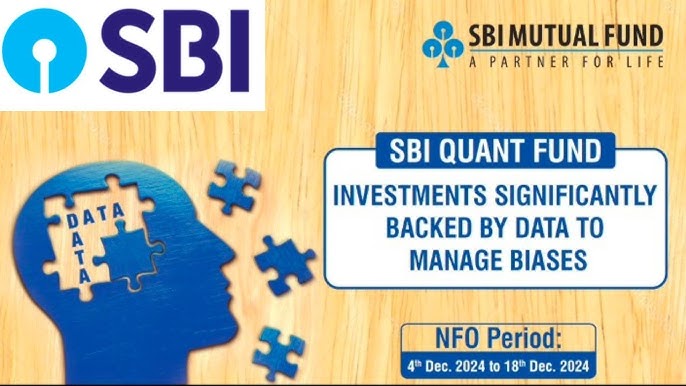
The SBI Quant Fund NFO DECEMBER 2024 Momentum, Value, Quality, and Growth are the four main investment factors that are equally balanced by the advanced quantitative methodology used by the SBI Quant Fund NFO in December 2024. The goal of this multi-factor strategy is to build a diversified portfolio that can dynamically adjust to shifting market conditions. An description of each component and how they interact is provided below: 1. Momentum: Stocks with recent high performance trends are the focus of momentum investing. The fundamental premise is that market participants’ behavioral biases, including herding or anchoring, will cause these equities to continue doing strongly in the near future. 2. Value: The focus of value investing is on stocks that are cheap in relation to their inherent value. These businesses frequently have low price-to-book (P/B), price-to-earnings (P/E), or price-to-sales (P/S) ratios. To buy now click here: SBI QUANT FUND NFO DECEMBER 2024 3. Quality: Businesses with solid business concepts and sound financial standing are the focus of quality. These consist of companies that have: 4. Growth: Companies with above-average earnings or potential for sales growth are the focus of growth investing. These are usually businesses in cutting-edge fields or growing industries. to get more information SBI QUANT FUND NFO DECEMBER 2024 Balancing the Factors: The SBI Quant Fund’s multi-factor strategy minimizes each factor’s distinct shortcomings while maximizing each one’s special strengths: Advantages of the Multi-Factor Strategy: Conclusion: The SBI QUANT FUND NFO DECEMBER 2024 is multi-factor strategy offers a balanced and structured approach to equity investing. By combining momentum, value, quality, and growth factors, the fund adapts to various market cycles, providing investors with an opportunity for long-term capital appreciation. This disciplined, data-driven method is particularly suitable for investors seeking diversification and stability in their portfolios while benefiting from cutting-edge investment methodologies if you need any help contact wealthy on INVESTINSURE GURU or https://ins.rajivmehta.in or rajivkisanmehta@gmail.com for all mutual funds and retirement planning with a corpus above 100 crores.

SBI QUANT FUND NFO DECEMBER 2024 Read More »

The Best Retirement Planning Advisors in Mumbai

The Best Retirement Planning Advisors in Mumbai

The Best Retirement Planning Advisors in Mumbai: Retirement planning is a critical aspect of financial management, ensuring a secure and stress-free post-work life. For residents of Mumbai, the city offers a plethora of financial advisors specializing in retirement planning. One standout name among these experts is INVESTINSURE GURU they are The Best Retirement Planning Advisors in Mumbai , located in Dadar. Known for their holistic and client-centric approach, they have earned a reputation for guiding individuals toward a financially stable retirement. Let us explore why retirement planning is essential? What makes a great retirement advisor? and Where to find the best Retirement Planning Advisor in Mumbai or India as per your need. We will also study Why InvestInsure Guru is a top choice for Mumbaikars. Why Retirement Planning Matters Qualities of the Best Retirement Planning Advisors InvestInsure Guru, Dadar Mumbai: A Trusted Name in Retirement Planning OverviewLocated in the heart of Mumbai, InvestInsure Guru specializes in comprehensive retirement solutions. With years of expertise, they cater to individuals seeking personalized financial guidance. Why Choose INVESTINSURE GURU? Other Notable Retirement Planning Advisors in Mumbai Conclusion For those planning their retirement in Mumbai, choosing the right advisor is crucial to achieving financial independence and peace of mind. choosing The Best Retirement Planning Advisors in Mumbai ie, INVESTINSURE GURU in Dadar stands out for its personalized, client-centric approach, making it a top choice for retirement planning. Are you ready to plan your retirement? Schedule a consultation with INVESTINSURE GURU or explore other reputed advisors in Mumbai to secure your golden years. Would you like assistance in setting up a meeting or learning more about retirement strategies? Let us know! Mutual fund investments are subject to market risks, read all scheme related documents carefully. Investment in Mutual Fund Units involves investment risks such as trading volumes, settlement risk, liquidity risk, default risk including the possible loss of principal. Rajiv Mehta INVESTINSURE GURU +91 9222443342

The Best Retirement Planning Advisors in Mumbai Read More »

How to invest in Mutual Funds Online

How to invest in Mutual Funds Online

How to invest in Mutual Funds Online We have taken an example of the Corpus formed by investing Rs 20000 per month for 40 years and a comparision of the returns at 10% to 20%. You can see that at 12% he will get 23 crores and at 20% he will get 340 crores or at 18% he will get 171 crores. This is only possible with active involvement and switiching funds yearly to get the best results contact us so we can show you the right path to be FINANCIALLY FREE these are some simple examples of How to invest in Mutual Funds Online Investing in mutual funds is online in India and it has been simplified now. Here’s a step-by-step guide: 1. Prepare Necessary Documents before you plan to get registered. 2. Complete Your KYC 3. Choose an Investment Platform You can invest via: If you are investing for the First time or a New Invester, my advice is talk to a good advisor near you or if you want help contact our team. We work on long term porfolio above 10 years, with an aim to build a retirement corpus of above 100 crores. 4. Select the Type of Investment The biggest mistake New investors make is go to Google and taking the advice online start investing. Please do not do that, the information online may be 2 days old or 2 months old and the market may have changed from bear to bull or vice versa. Do your own research or talk to a good advisor who has experience in the field of Stock Market and Mutual funds. People have lost heavily by such mistakes and you cannot correct it before 1 years as there is a Tax involvement on your withdrawal. 5. Choose a Mutual Fund Scheme This is the tougest work as if you get only 12% or below it is bad judgement and people will laugh at you. The benchmark is 15 to 16% and you should get atleast double of that in this bull market going on for last 2 years to know more connect with our team. Your investment decisions will depend on following factors. 6. Start Investing 7. Track Your Investments Would you like more specific guidance on selecting funds or using a particular platform? We are just a phone away call us and we will see that your porfolio flies higher and higher to touch your goals. By Rajiv Mehta INVESTINSURE GURU Contact No +91 9222443342

How to invest in Mutual Funds Online Read More »

Stock Exchange Board

What mutual funds I should invest in 2025?

What mutual funds I should invest in 2025? Investing in mutual funds in India for 2025 depends on your risk tolerance, investment goals, and time horizon. To make money in Indian Market is easy if you are consistent. What mutual funds I should invest in 2025? is a question in everybody mind should it be equity or Index Etc let us see what is best for us. 1. Equity Mutual Funds (For Long-Term Growth) Equity funds are ideal for high-growth potential over the long term it has been observed that the market bounces back within 7 years and nobody has made loses if he stays invested for 7 to 10 years in the market. 2. Index Funds and ETFs (For Passive Investing) These track benchmark indices like NIFTY 50 or Sensex and are cost-effective with lower expense ratios. these follow the index and returns are usually 15 to 16% 3. Debt Mutual Funds (For Stability and Income) Debt funds are suitable for short- to medium-term goals or conservative investors. 4. Hybrid Mutual Funds (For Balanced Growth and Stability) Hybrid funds combine equity and debt to balance risk and returns. 5. International Funds (For Global Diversification) International funds provide exposure to global markets, including U.S. and emerging economies. 6. Tax-Saving Mutual Funds (ELSS) (For Tax Benefits Under Section 80C) Equity Linked Savings Schemes (ELSS) have a lock-in period of 3 years and offer tax benefits. What mutual funds I should invest in 2025? have you been able to decide now if not here are more choices How to Choose the Right Mutual Funds For tailored advice, consulting with a financial advisor is highly recommended. To explore advanced tools for financial planning, FREE meeting with rajivmehta is an excellent alternative to consider. you can also get in touch with us by subscribing to our mail. Mutual fund investments are subject to market risks, read all scheme related documents carefully. Investment in Mutual Fund Units involves investment risks such as trading volumes, settlement risk, liquidity risk, default risk including the possible loss of principal. SBI PSU Fund has given 37.49 last 3 years. WhiteOak Capital Large Cap Fund – Regular (IDCW) has given 30.99 this is as per Dec 2024 to get todays information connect with us on 91 9222443342.

What mutual funds I should invest in 2025? Read More »

Scroll to Top